


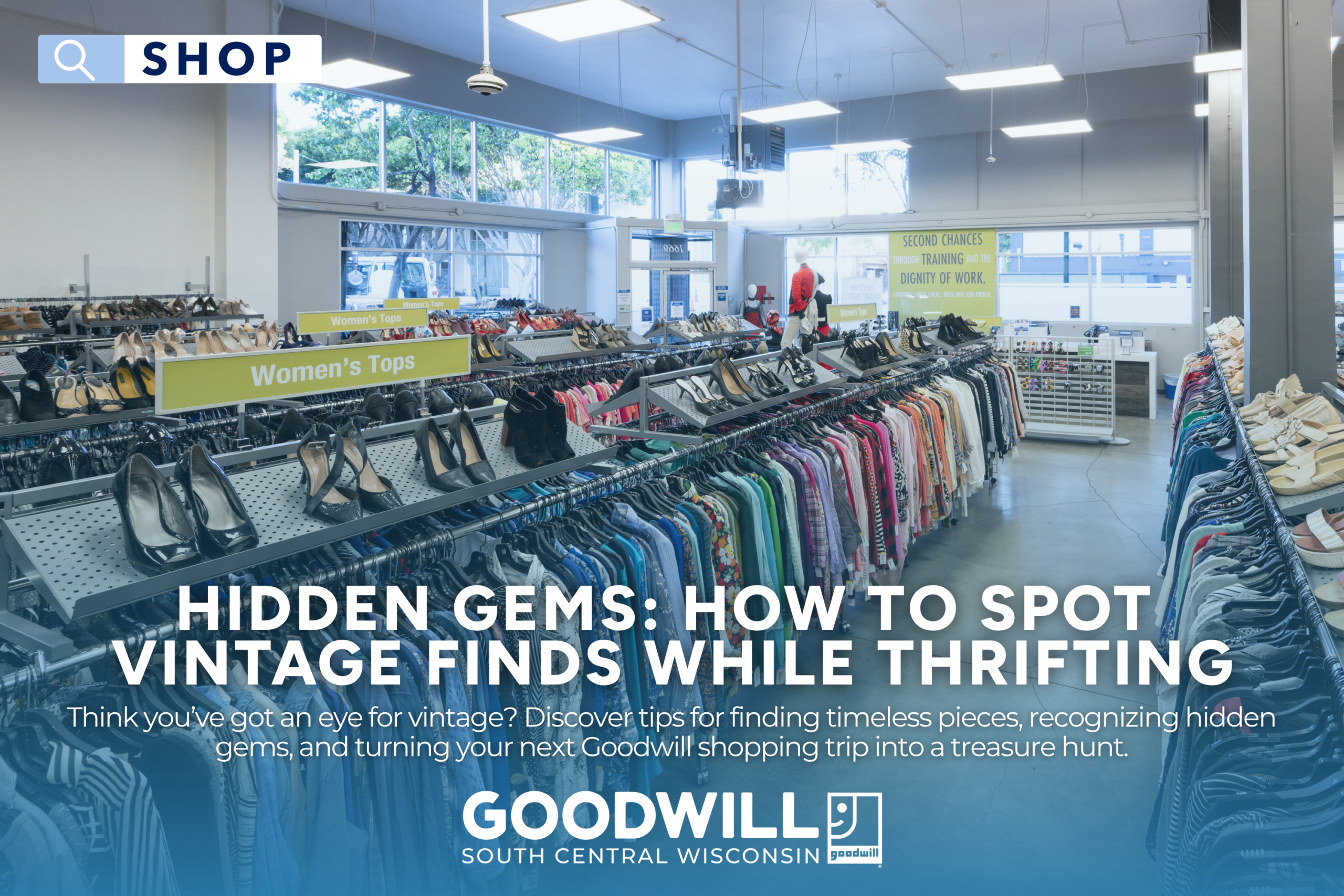
Thrifting is all about the thrill of the find. You never know what you might come across when you walk through the doors at Goodwill, and sometimes the best discoveries are the pieces hiding in plain sight.
From vintage clothing and accessories to home decor, furniture, books, and collectibles, secondhand stores can be a great place to find items with character and history. The key is knowing what to look for and taking your time while you shop.
What Makes Something Vintage?
Before you start your search, it helps to understand what makes an item vintage. While there isn’t one universal definition, the term generally refers to items that are at least 20 years old and represent the style, design, or craftsmanship of their time.
Vintage doesn’t always mean rare or expensive. Many vintage pieces are simply older items that have a distinctive look, quality, or history that makes them stand out from what’s being produced today.
And that’s part of the fun of thrifting. You don’t have to be an expert to find something special.
Check the Labels and Tags
One of the easiest ways to get a clue about a clothing item’s age is to check the label.
Pay attention to:
- Brand Names: Some brands have changed their logos, labels, and designs over the years, which can help you identify an older piece.
- Label Style: Look at the shape, lettering, colors, and overall design of the tag.
- Made-In Information: Older garments may have different country-of-origin labels than newer pieces.
- Care Instructions: The style and format of care labels can sometimes provide clues about when a garment was produced.
- Material: Fabrics such as wool, linen, silk, and quality cotton can be worth a closer look, especially when paired with older construction or design details.
- Single-Stitch Tees: Take a look at the sleeves and bottom hem. Older T-shirts often use a single line of stitching, which can be a helpful clue that a tee is vintage. It’s not a guarantee of age, but it’s a detail worth checking when you’re hunting for vintage finds.
If something catches your eye, take a moment to inspect the label instead of immediately moving on. That extra look could reveal that you’ve found something from another era.
Look at the Details
Sometimes you can spot a vintage piece before you even look at the label.
Look closely at the construction and details of an item. Vintage clothing may feature distinctive buttons, metal zippers, unique stitching, structured silhouettes, decorative details, or patterns that aren’t as common in today’s clothing.
The same idea applies to home goods. Look for interesting materials, craftsmanship, hardware, patterns, and designs that give an item a sense of character.
When you’re thrifting, don’t just ask, “Do I like this?” Ask yourself, “What makes this different?”
That question can help you notice pieces that other shoppers might overlook.
Don’t Overlook Accessories
Some of the easiest vintage finds can be hiding in the accessories section.
Keep an eye out for:
- Purses
- Belts
- Scarves
- Jewelry
- Hats
- Watches
- Sunglasses
- Shoes
Accessories can add personality to an outfit, and smaller pieces can be an easy way to incorporate vintage style into your wardrobe without committing to an entire vintage look.
Explore Beyond the Clothing Racks
Vintage finds aren’t limited to fashion.
As you shop, take a look through different sections of the store. You might discover vintage-inspired or older pieces among:
- Home Decor: artwork, lamps, mirrors, vases, baskets, and decorative pieces
- Furniture: tables, chairs, cabinets, and other pieces with timeless designs
- Books: older editions, classic titles, illustrated books, and interesting covers
- Kitchenware: dishes, glassware, cookware, serving pieces, and small appliances
- Games and Toys: board games, toys, puzzles, and collectibles
- Records and Media: vinyl records, CDs, movies, and other media
Learn to Recognize Vintage Styles
You don’t need to memorize every vintage brand or decade to become a better thrifter. Start by familiarizing yourself with different eras and the styles associated with them.
You may begin noticing:
- Bold patterns and silhouettes from the 1960s and 1970s
- Bright colors and statement styles from the 1980s
- Classic denim and casual styles from the 1990s
- Retro home décor and furniture designs
- Distinctive prints, fabrics, and shapes associated with different decades
The more you see, the easier it becomes to recognize styles that catch your attention.
Take Your Time While You Shop
One of the best ways to find hidden gems is simply to slow down.
Instead of quickly scanning the racks, look through pieces carefully. Check sections you don’t normally shop. Pick up an item that catches your eye and examine it from different angles.
And don’t be afraid to make another pass through the store. New merchandise is added throughout the day, so you may discover something you didn’t notice the first time.
Thrifting is part shopping trip and part treasure hunt. Give yourself time to enjoy the search.
Ready to Start Your Treasure Hunt?
The next time you visit Goodwill, take a closer look. Check the labels, notice the details, explore different sections, and keep an open mind.
You never know what might be waiting on the next rack or shelf. That unexpected find could become your new favorite piece.
And when you shop secondhand, you’re doing more than finding something great. Your purchases help support Goodwill’s mission of helping people in South Central Wisconsin live, work, and thrive.
So grab your shopping bag, keep your eyes open, and see what hidden gems you can uncover on your next Goodwill shopping trip!